
Disclosure: This article may contain affiliate links; we may earn a commission if you click through at no extra cost to you.
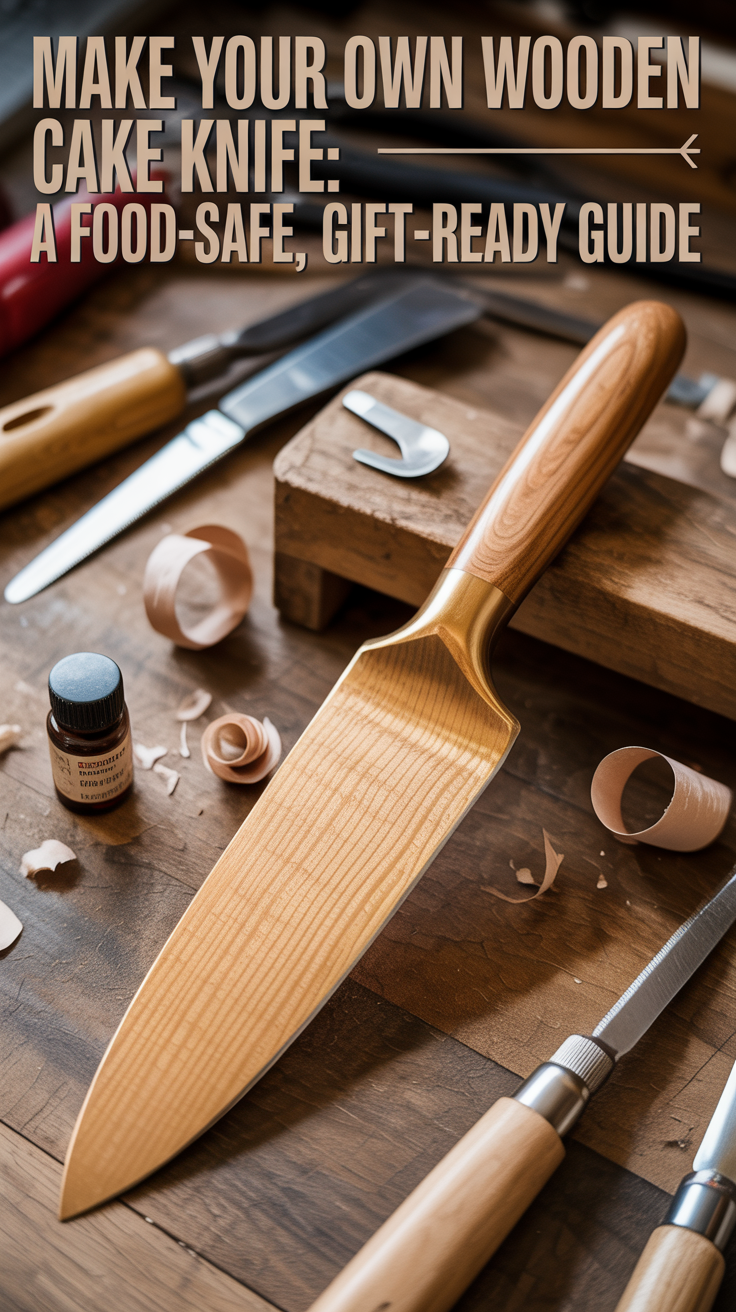
Celebration cakes deserve a keepsake tool, and few things feel as personal as the moment you make your own wooden cake knife. This guide walks you through choosing food‑safe wood, shaping a gentle, non‑cutting edge that glides through cake layers without scratching plates, and finishing the piece so it looks heirloom‑quality and lasts for years. Whether you’re crafting one for a wedding, an anniversary, or a housewarming, the process is approachable and incredibly satisfying.
If you want ready‑to‑print patterns and hundreds of shop‑friendly project plans to spark ideas for handle shapes and presentation sets, see TedsWoodworking.
Table of Contents
How to Make Your Own Wooden Cake Knife: Design and Dimensions
A wooden cake knife isn’t a sharp slicer like a chef’s knife. It’s a ceremonial server with a smooth, gently tapered edge that separates cake layers without tearing the crumb or scratching plates. Keep that intent in mind while you design.
- Overall length: 10–12 in (25–30 cm) feels right for most cakes and hands. Go longer for larger tiered cakes.
- Blade length: 6–8 in (15–20 cm), with a subtle belly that helps start the cut.
- Blade width: 1.25–1.75 in (3–4.5 cm) at the widest point for stability and elegance.
- Thickness: 1/4–3/8 in (6–9 mm) at the spine, tapering to a rounded, non‑cutting edge.
Design principles that matter:
- Grain direction: Run the grain parallel to the blade’s length for maximum strength. End grain or cross‑grain at the “neck” can lead to snapping.
- Gentle wedge: Picture a very shallow chisel—just enough wedge to glide into cake layers. The edge should be softly rounded, not sharp.
- Handle ergonomics: A subtle palm swell and a small finger index at the front give confidence without looking bulky.
- Tip safety: Round the tip. Knife‑like points aren’t needed and can mar plates.
- Matching set option: Design a coordinated cake server (triangular spatula) using the same profile language. This makes a stunning gift pair.
Sketching your template:
- Start with a rectangle representing your board. Draw the blade arc with a flexible ruler or a thin strip of wood as a curve guide.
- Add a slight S‑curve in the handle for comfort and elegance.
- Make a paper or thin cardboard prototype and “cut cake” in the air to test balance and size. Adjust before you commit to wood.
Pro tip: Keep your silhouette simple and refine with curves during shaping. Simpler linework gives a more timeless result and makes sanding faster.
Materials and Tools to Make Your Own Wooden Cake Knife
Materials
- Wood species: Choose tight‑grained, closed‑pore hardwoods that are traditionally used for kitchenware and finish smoothly. Great choices include hard maple, cherry, beech, birch, and walnut (verify allergy considerations). Avoid open‑pore woods like red oak for food‑contact blades, since the pores can trap residue.
- Board size: A straight, flat board at least 2.5 in x 12 in x 3/8 in (65 x 300 x 9 mm) for a one‑piece knife.
- Food‑safe finish:
- Food‑grade mineral oil (USP) and a beeswax/mineral oil blend for an easy, repairable finish.
- 100% pure tung oil (not “tung oil finish” blends) as an alternative; allow a full cure.
- Shellac is food‑safe when cured, but less water‑resistant. Best for keepsake pieces less likely to see heavy washing.
Hand tools (choose what you have)
- Pencil, ruler/straightedge, flexible curve or French curves
- Coping saw, fret/scroll saw, or a fine‑tooth pull saw
- Spokeshave or block plane (optional but great for fast shaping)
- Rasps/files: one coarse shaping rasp and one fine cabinet file
- Card scraper (optional) for removing tool marks
- Sandpaper: 80, 120, 150, 220, 320, 400 grit
- Clamps and a bench board or vise
- Burnisher/round dowel for easing edges
Power tools (optional)
- Bandsaw or scroll saw for the outline
- Belt/spindle sander for efficient fairing
- Drill and small drum sander for finger choils or curves
Safety and shop setup
- Dust mask or respirator (N95 or better), safety glasses, hearing protection if using power tools
- Good lighting and a stable, slip‑free work surface
- Dust management is essential; wood dust can irritate lungs. See CDC NIOSH guidance on wood dust exposure: Centers for Disease Control and Prevention (NIOSH) Wood Dust Topic Page
If your workspace is tight or multipurpose (garage, apartment, balcony), a compact tool strategy helps. A small, smart layout and noise‑friendly tool choices go a long way; resources like UltimateSmallShop – The Next Woodworking Blockbuster! can help you plan an efficient and safe setup without overspending.
Step‑by‑Step: Make Your Own Wooden Cake Knife from Blank to Finish
- Select and prepare the blank
- Choose a board with straight, tight grain. Rift‑ or quarter‑sawn stock gives predictable, attractive lines.
- Joint/plane or sand one face flat. Mark the “show face” you want visible in photos.
- Transfer the template
- Trace your paper template onto the board, aligning the blade length with the grain. Leave 1/8 in (3 mm) around the line for trimming.
- Mark the centerline and key reference points (blade belly, handle swell, index notch).
- Rough cut the profile
- Use a bandsaw/scroll saw or a coping saw to cut outside your line.
- Make relief cuts in tight curves to avoid binding and tear‑out.
- Keep offcuts; they’re great test pieces for finish and edge profiles.
- True and fair the outline
- Refine to the line with a rasp, file, and sanding block. Use long, even strokes to fair curves. Aim for flowing transitions with no flat spots or kinks.
- Establish the handle’s final width in this stage.
- Add the basic taper
- On both faces, pencil a “no‑go” line 1/8 in (3 mm) back from the edge. This preserves thickness along the spine.
- With a block plane, spokeshave, or coarse rasp, create a shallow, even bevel toward the edge on both sides. Stop short of a sharp apex; keep at least a 0.3–0.5 mm rounded land to protect plates.
- Blend the bevel into the flat of the blade seamlessly.
- Shape the handle
- Lightly round the handle’s edges with a rasp. Add a subtle finger index at the front if desired. Keep cross‑section oval or soft rectangular with eased corners.
- Check grip in both right and left hands. It should feel neutral, not forcing the wrist.
- Smooth the surfaces
- Scrape or sand out tooling marks. Progress through 120, 150, 220 grits on all faces.
- Lightly mist or wipe with water to raise grain. When dry, sand again at 220/320 to knock down fuzz.
- Finish at 320–400 on the blade; stop at 220–320 on the handle for grip.
- Pre‑finish test
- On an offcut, trial your chosen finish. Check color, sheen, and feel before applying to the knife.
- Edge and tip finish
- Finalize the edge as a gentle rounded wedge. The goal is gliding performance, not sharpness.
- Round the tip to a 3–5 mm radius; soften the spine and handle edges to about a 1/16 in (1.5 mm) roundover.
At this point, your blank is shaped, smooth, and ready for the food‑safe finish of your choice.
Handle shaping and balance for long‑use comfort
Elegance in a wooden cake knife comes from subtle curves you can feel but barely see. A comfortable handle helps the server maintain control when slicing dense layers or tall slices on wobbly plates.
Refining ergonomics
- Palm swell: Aim for the thickest handle point to sit under the palm center, about 60–70% back from the blade junction. The swell should be gentle, not bulbous.
- Neutral alignment: The handle’s axis should line up with the blade’s centerline—any twist introduces awkward torque.
- Index cue: A shallow thumb or forefinger cue on the top or side lets you steer the edge precisely without squeezing harder.
Balance and weight
- A 10–12 in cake knife should feel slightly handle‑heavy so the tip doesn’t dip into frosting. Check balance by resting the knife on your finger at the neck; if overly blade‑heavy, thin the blade slightly or add a bit more handle substance.
- Keep overall mass light. Excess weight can crush delicate frosting details.
Detailing the neck
- The transition between handle and blade—the neck—takes the most stress. Keep grain continuous here and avoid drastic notches. A small radius blend adds strength and looks refined.
Surface feel
- The tactile experience matters for celebratory photos and long ceremonies. After late‑stage sanding, burnish the wood lightly with a hard dowel or shavings to lay down fibers and create a silky, closed feel that resists moisture.
Customization ideas
- Engraving or pyrography: Add initials, dates, or a short quote along the spine or handle flat. Burned lines should be shallow; seal with the same food‑safe finish.
- Inlay: A small, contrasting wood dot at the handle butt becomes a tasteful “gem.” Keep inlay shallow and sealed thoroughly.
- Ribbons or keepsake box: Prepare a fabric tie or a small wooden presentation box to elevate the gifting experience.
Work slowly on this stage. Even tiny refinements to the handle and neck make the difference between “nice” and “heirloom.”
Sanding strategy and safe edge geometry
Sanding is where your knife transforms from tool‑shaped wood into a finished heirloom. A structured approach cuts time and yields better results.
Sanding workflow
- Establish a baseline: If tooling marks remain at 120 grit, don’t jump ahead. You can’t fix facets at 400 grit without going back.
- Use blocks where possible: A firm block on flats—and a flexible foam pad on curves—keeps surfaces consistent.
- Grit progression: 120 (remove tool marks), 150 (refine), 220 (pre‑finish smoothness), 320 and 400 (silky feel, especially on the blade and tip). Dust off between grits.
Raise the grain
- Wipe with a damp cloth after 220 grit. Let dry fully and sand lightly at 320. This pre‑raises fibers so the first wash after finishing won’t feel rough.
Edge geometry
- Remember, this is a serving wedge, not a sharpened knife. Stop your bevels well before they meet; leave a soft, radiused edge. A good test: press the edge lightly to your thumbnail; it should not bite or scratch.
- Aim for a 15–20° visual wedge from the spine to near the edge, then a small, rounded land. This geometry glides through cake layers and buttercream without tearing.
- Ease every arris (sharp corner) to prevent splintering and improve wash‑down comfort.
Plate‑safe tip
- Round the tip so it cannot scratch ceramic or glass. Round the spine, too, so guests can safely “guide” slices with a finger.
Dust safety
- Exotic woods can cause allergic reactions for some people. Work with good extraction and a respirator if you shape for extended sessions. For more on wood allergy/toxicity, see The Wood Database: Wood Allergies and Toxicity.
Once your surfaces feel uniformly smooth to the touch and your edge is a controlled wedge, you’re ready for finish.
Food‑safe finishes and curing for kitchen confidence
Finishing choices impact both beauty and durability. For cake knives, prioritize food contact safety, easy maintenance, and a feel that won’t cling to frosting.
Mineral oil and beeswax blend
- What it is: USP food‑grade mineral oil plus a beeswax “board butter” topcoat. Mineral oil penetrates and conditions; beeswax adds a satin feel and moisture resistance.
- Why it’s great: Non‑drying, easy to renew, highlights grain softly, ideal for occasional‑use items like cake servers.
- Application:
- Warm your oil slightly. Flood the blade and handle; let it soak 20–30 minutes. Wipe off.
- Repeat once or twice, letting each soak in.
- Apply a warm beeswax/mineral oil mixture, rub in, and buff after 30–60 minutes.
- Safety reference: White mineral oil is cleared for food‑contact applications under 21 CFR 178.3620(a) by the U.S. FDA: Electronic Code of Federal Regulations.
100% pure tung oil (fully cured)
- What it is: A natural drying oil that polymerizes into a hard, water‑resistant film when fully cured. Use 100% tung oil only—avoid blends labeled “tung oil finish.”
- Why it’s great: More water‑resistant than pure mineral oil, adds a warm glow, good for gifts subject to frequent wiping.
- Application:
- Wipe on a very thin coat. Let it penetrate 20–30 minutes, then wipe off all excess.
- Allow 24 hours between coats. Apply 3–5 thin coats.
- Cure at least 7 days (longer in cool/humid environments) before food contact to eliminate any odor and ensure full polymerization.
- Note: Some nut‑sensitive individuals prefer to avoid nut‑derived oils; discuss with recipients if unsure.
Shellac (optional)
- What it is: A natural resin dissolved in alcohol; completely food‑safe when cured.
- Pros and cons: Beautiful gloss and great for decorative pieces, but less water/heat resistant. If you choose shellac, keep the blade waxed and avoid long soaks.
General finishing tips
- Avoid salad‑bowl myths: Many commercially labeled “food‑safe” finishes are blends. Read labels carefully; when in doubt, use USP mineral oil and beeswax or 100% tung oil.
- Curing matters more than chemistry: Most common film finishes are safe after full cure, but for a cake knife, simple penetrating finishes are reliable and easy to refresh.
- Final buff: After your last coat cures, buff with a clean cotton cloth. The surface should feel silky and dry, without tack.
For an accessible overview of food‑safe finishing principles, see Fine Woodworking’s “Are Your Finishes Food Safe?” by Bob Flexner (Fine Woodworking).
Care, maintenance, and a lifetime of celebrations
A wooden cake knife is low‑maintenance if you keep to a few simple habits.
Cleaning and storage
- Hand wash only: Rinse promptly with mild soap and lukewarm water. Never soak, dishwash, or use harsh scrubbers.
- Dry thoroughly: Wipe dry and let air‑dry standing on edge.
- Refresh finish: Reapply a light coat of mineral oil or board butter every few months—or before big events—to restore luster and water resistance.
Use and handling
- Use on plates and cake boards, not on stone or metal surfaces.
- Don’t lever hard in dense cakes; let the wedge glide through with gentle pressure.
Seasonal care
- Extremely dry or humid environments can move wood slightly. A quick oil rub helps stabilize feel and sheen.
Gifting and personalization
- Include a small care card with the gift: “Hand wash only, oil as needed, avoid dishwasher.”
- Add a ribbon or a custom box to elevate presentation.
Recommended woodworking resources and templates
- Patterns and templates: For additional handle ideas and serving‑set templates, browse TedsWoodworking—a broad plan library to spark your next heirloom project.
- Small shop setup: If you’re optimizing a compact workspace, UltimateSmallShop – The Next Woodworking Blockbuster! can help you choose tools and layouts that fit your space and budget.
Turning your craft into a side income
- Weddings, anniversaries, and housewarmings keep demand strong for custom cake servers. If you’re considering selling made‑to‑order sets with initials and dates, a practical resource like WoodProfits offers guidance on pricing, packaging, and turning small‑batch woodworking into a streamlined side business.
Conclusion
When you make your own wooden cake knife, you create a keepsake that’s both practical and meaningful. With the right wood, a gentle, plate‑safe edge, and a food‑safe finish, your handmade server will glide through layers and look beautiful in photos—then keep serving for years. Keep this guide handy for future gifts, and refine your silhouette and finish over time until you’ve developed your signature style.
For more depth on finishes, wood safety, and shop practices, consult reputable sources like the Electronic Code of Federal Regulations for mineral oil clearance, CDC NIOSH for dust safety, and Fine Woodworking’s coverage of food‑safe finishes.
FAQ
What wood is best to make your own wooden cake knife?
Hard maple, cherry, beech, birch, and walnut are excellent. Choose tight‑grained, closed‑pore species for a smooth, sanitary surface and strength.
Do I need to make the edge sharp?
No. A wooden cake knife should have a gentle, rounded wedge that parts cake layers without scratching plates. Avoid a sharp or knife‑like edge.
What is a food‑safe finish I can trust?
USP mineral oil with a beeswax topcoat is simple and reliable. 100% pure tung oil is also suitable when fully cured. Always allow full curing before food contact.